
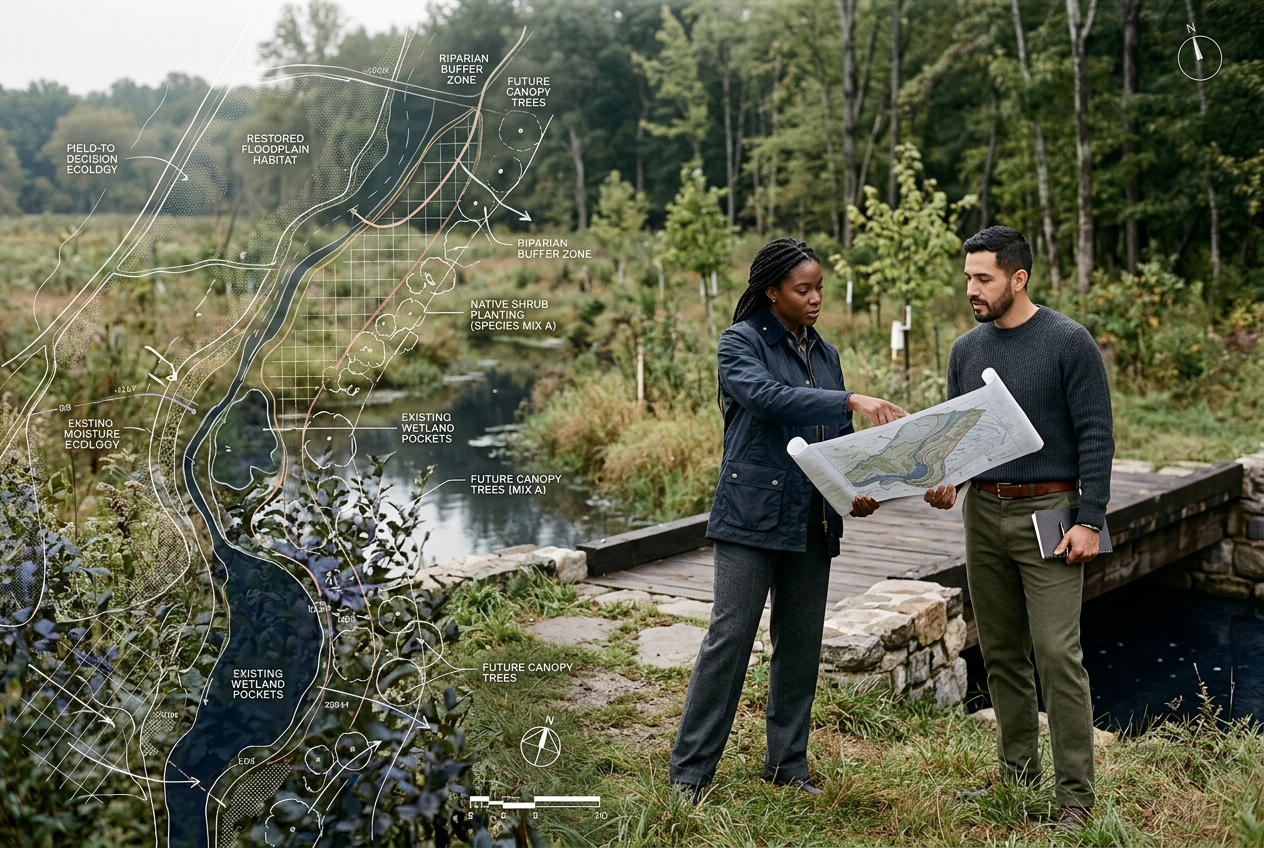
Bring ecological evidence into the next project decision.
Your project probably already has studies, drawings, field records, requirements, and specialist inputs. Wild Lands helps determine what that information means for the next decision: what is already known, what remains uncertain, what needs targeted verification, and how the ecological findings should change the work.
Where we can help
Planning & decision support. Turn existing studies and landscape context into a decision map: viable alternatives, ecological constraints, and unresolved questions that matter to the next approval or work package.
Field & spatial evidence. Identify which uncertainties could change the plan, then define targeted field verification or monitoring to resolve them. Connect observations and spatial evidence to an explicit management or delivery decision.
Coastal & infrastructure ecology. Integrate borrow and placement information, habitat context, beneficial-use opportunities, and recovery questions into restoration planning and project learning.
Project leadership. Bring the scope, specialist interfaces, sequence, and quality-review responsibilities into one usable answer. Keep ecological findings connected to the people making and carrying out project decisions.
Engage Wild Lands for a bounded work package, a teaming role, or ongoing project support. Principal-led delivery keeps accountability clear; qualified specialists retain their technical and licensed authority.
To begin, share the location, decision or work package, available studies, timetable, and role you need us to fill.